Investor brief
2026

Two and a half billion cameras are watching. Not one of them is keeping us safe, until now.

jupyter is the intelligence that changes that.

Scroll
A jupyter protected home

jupyter indoor haloLaunch Edition

01 / 24

Investor brief · 2026

On a mission to turn the cameras in 84 million homes from passive recorders into intelligent guardians.

Today's cameras watch crime happen but cannot act to deter it. jupyter is changing that.

jupyter is the first privacy focused edge AI home security system that understands what is about to happen, and acts to deter it. Six AI engines read intent and intervene before the loss, processing everything on device, on the cameras they already own.

~84M1

Existing camera households across our four launch markets

~$41B11

Global smart home security market, 2025

5,000+

Third party camera models universally supported

A$3.25M

Seed round, currently raising

Scroll

02 Our origin

We built what the camera industry would not.

A note from the founder.

After 18 years in applied AI and product engineering, I built a home that won an APAC Insider Award for its intelligence. I assumed the next step was luxury home automation. The market said otherwise. Security is now the anchor of the smart home, not a convenience add on: the smart home security market reached $41.4B in 2025, with cameras its largest device segment11, and adoption is driven by safety, with a 30 per cent surge in North American camera adoption in 2024 tied to rising crime16. Convenience could wait. Protection could not.

The gaps were consistent. Cameras recorded the event but never prevented it. Homeowners watched clips of their own homes being robbed, helpless. Cloud hardware tied protection to a monthly fee and moved private footage off site.

So we built an engine for each pain we heard. Parcels stolen from the doorstep: ParcelAI sees the reach and triggers the siren before contact. Break ins while the house looks empty: OccupancyAI makes it sound lived in, and LoiterAI reads intent at the gate. The blind spots a camera misses: SoundAI hears them. Faces that matter: FaceAI knows the household, even in low light. The garage left open: VehicleAI closes it. Six engines, two of them world firsts, all running on the cameras people already own.

Competitors cannot simply follow. Their business is selling you their camera; ours is making yours intelligent, so bring your own camera cannibalises their core revenue. Matching our on device privacy means surrendering the cloud fees their model runs on. Two revenue streams they would have to walk away from, not two features they would have to build.

Temi Akinloye, Founder & CEO

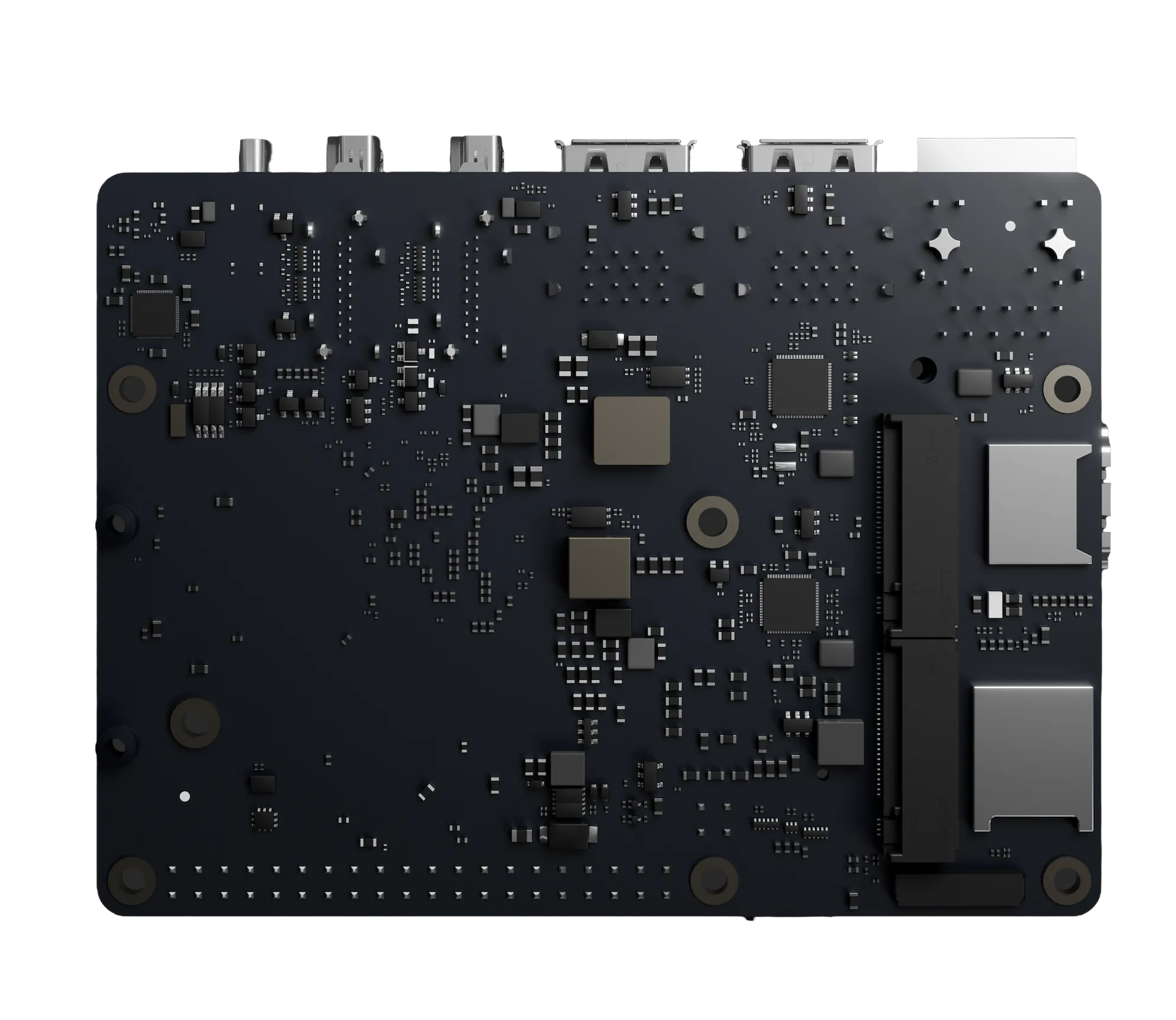
jupyter Hub Main Vision AI Processor Board

jupyter Hub,
Main Vision AI Processor Board.
Release v1. 2026.

03 The broken category

A multi billion dollar category failing at its primary task.

From our market fit research, three gaps came up again and again.

01 · It records, it does not deter

The crime still happens.

Cameras capture the break in, the theft, the loss3, then leave the owner to watch it back. Detection is not deterrence. A recording stops nothing.

02 · You are locked to their hardware

Their AI, only on their cameras.

Premium recorders gate their intelligence to their own cameras. On a UniFi NVR, third party cameras get continuous recording only, with no AI detection unless you buy more of their hardware. The cameras you own are shut out.

03 · It buries the real alert

So you stop listening.

Basic sensors fire on shadows and wind. Owners mute the app within weeks, then miss the one alert that mattered. A system you ignore protects no one.

04 The differentiation

Everyone else records the crime. jupyter acts before it.

For every gap, a deliberate answer, and each one is hard to follow.

01

Proactive deterrence

Where others record, we act. Six engines read intent and intervene before the loss: ParcelAI and LoiterAI trigger the Outdoor Halo siren, OccupancyAI makes an empty home sound lived in. Two are world firsts.

02

Bring your own camera

No rip and replace. The Hub runs our full AI on over 5,000 existing camera models. Competitors gate their intelligence to their own cameras, and cannot open it up without cannibalising the hardware sales their business runs on.

03

Privacy by architecture

Everything processes on the Hub, in the home. Footage never leaves, and there are no mandatory fees. Matching this means surrendering the recurring cloud storage revenue a cloud first competitor depends on.

04

Signal, not noise

LoiterAI reads posture and dwell to tell intent from a passing shadow, so the alert you get is one worth acting on. The app stays quiet until something genuinely matters.

Chapter 01

Our Products

05 The Hub

The intelligent recorder that turns old cameras into active crime deterrents.

Works with the cameras you own. Nothing leaves the house.

Today, most security cameras feed into an NVR or DVR, a recorder box that consolidates the footage onto a hard drive for you to review later. It is a filing cabinet for crimes that already happened. The Hub is our reinvention of that box. About the size of an Apple TV, it connects to the same cameras, but instead of just storing footage it gives them intelligent vision, sensing crime as it forms and orchestrating the jupyter Halos to respond. It runs all six AI engines on the device itself. No cloud, no mandatory fees, and no footage ever leaves the home.

Runs six AI engines on the device·Works with 5,000+ existing camera models·No cloud and no mandatory fees·Footage never leaves the home·Orchestrates the Indoor and Outdoor Halos·About the size of an Apple TV

06 Indoor Halo

The ears of the home, and the world's first occupancy illusion.

The reason an empty house still sounds lived in.

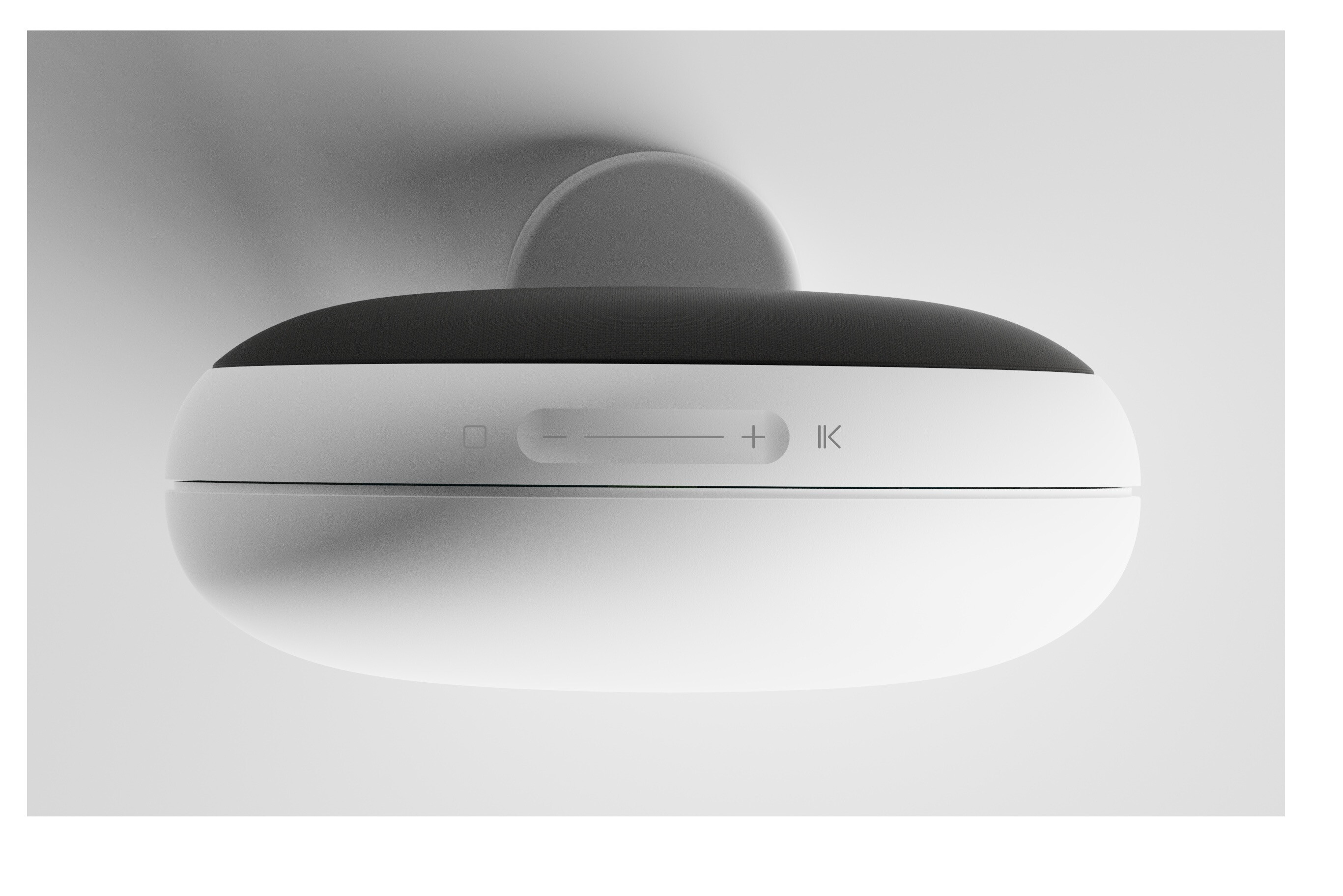
Cameras have blind spots, and burglars exploit them. The Indoor Halo is the ears of the home: its microphones let the Hub hear the sounds of a break in or distress where no lens is pointing, and trigger a loud siren that deters. Research shows a home that seems occupied deters far better than an alarm alone, so we built the world's first occupancy illusion. Through precision calibrated speaker drivers, when the Hub senses someone loitering, the Indoor Halo fills the home with the realistic sounds of life, people moving, a dog barking and pacing, so to anyone outside the house is plainly occupied. It also arms and disarms through the jupyter Keyfob and entry sensors, with no codes and no keypad.

Hears break ins in camera blind spots·World first occupancy illusion·Realistic sounds of life when loitering is sensed·Triggers a deterrent siren·Arms and disarms by keyfob and entry sensors·No codes and no keypad

07 Outdoor Halo

The all weather intelligent outdoor alarm, reinvented to act on intent.

Active deterrence triggered by intent, not just motion.

The Outdoor Halo is our reinvention of the siren and strobe alarm, mounted on the facade. The Hub does the thinking: when ParcelAI or LoiterAI confirms a parcel being taken or someone lingering with intent, it triggers the Halo, which answers within a second with a loud siren and a bright strobe that make staying not worth it. One unit commands a facade, it can be set off manually from the app, and it is sealed and weatherproof. It ships with the Outdoor Protection and Orbital Protection bundles.

Intelligent siren and strobe·Triggered by confirmed intent, not just motion·Responds within a second of a Hub command·One unit commands a facade·Manual trigger from the app·Sealed and all weather

08 SecureProtect app & Apple Watch

Insight without the scroll.

Security in plain language. Immediate control from the wrist.

SecureProtect app · iOS and Android

  • Daily events as concise text summaries, not endless timelines
  • Ask VoiceAI what happened, in natural language
  • Live view and recordings when you want them
  • Onboard a new camera or device in minutes
  • Arm, disarm, and tune the system from anywhere

Apple Watch

  • Genuine alerts arrive as a tap on the wrist
  • Trigger the Halo alarm with one tap
  • Switch the home into guard mode from anywhere
  • A glanceable read on the home, without the phone

09 Universal Retrofit

0+

Third party camera models. All upgraded to intelligent vision in minutes.

The Hub connects to legacy CCTV, modern IP cameras, and doorbells through open standards. Customers keep the cameras they paid for. Only the intelligence is new.

Try it. Search a camera brand investors will recognise.

10 The six AI engines

Six AI engines. Two world firsts.

All running locally on the Hub.

Each engine solves one real problem. Tap any engine to go deeper.

01

FaceAI

Physics first recognition

Recognises every face equally, holding accuracy in the low light where commercial systems fail.

Learn more
02

ParcelAI

World first · Active deterrence

Reads intent and posture as a hand reaches for a parcel, and triggers the Outdoor Halo before contact. It prevents the loss, it does not just film it.

Learn more
03

LoiterAI

Behavioural analysis

Trained on the documented behaviour of burglars. Reads when presence becomes intent.

Learn more
04

SoundAI

Acoustic intelligence

Hears the acoustic anomalies in the blind spots cameras cannot cover, and raises the alarm the moment a sound breaks the pattern of the home.

Learn more
05

VehicleAI

Vehicle recognition

Recognises the family car and closes the garage as it leaves, securing the entry point most often left open by accident.

Learn more
06

OccupancyAI

World first · Proactive deterrence

Plays the sounds of an occupied home through the Indoor Halo while the family is away. The home stops sounding empty.

Learn more

Chapter 02

The Moat

11 The moat

A hardware business with a moat competitors cannot copy.

We are a hardware business, and proud of it. The moat is what protects the hardware.

Revenue is, and will remain, predominantly hardware. The defensibility sits in two places competitors cannot follow. First, our patents, filed across four markets, on the deterrence engines. Second, a business model trap: their business is selling you their camera, so they cannot champion bring your own camera without cannibalising that revenue, and they cannot match our on device privacy without surrendering the cloud fees their model depends on. On top of the hardware, an optional VoiceAI subscription adds a high margin services layer that grows over time, not the core of the business, but a healthy and rising share of it.

Residential · VoiceAI Subscription

Consumers upgrade to VoiceAI to ask their home what happened in natural language, in the SecureProtect app and on Apple Watch, with Android Watch support on the near term roadmap. VoiceAI is the first of a growing services layer: we roll out incremental value over the air, integrations and automations with smart door locks and garage controls, and Google Home and Alexa for seamless control and insight. Each release deepens the reason to stay subscribed and lifts the high margin recurring share on top of the hardware base.

Commercial · Helios Dashboard

Built for professional security teams, building managers, hotels, small businesses, and government sites, Helios is the most advanced security dashboard yet, a browser based command centre with deep insight across many cameras and locations. It surfaces only what matters to the operator, activates alarms to deter blacklisted faces, loiterers, and unusual sounds, and answers natural voice questions with summaries across any camera or all of them at once. It monetises the commercial sector from day one.

12 The scale engine

Argus. Flatline the headcount.

Operational excellence that protects our margins.

Argus is our AI agent driven fleet observability platform. Multiple agents, trained on the core of the jupyter SecureProtect OS as skilled experts, predict issues, resolve them, and push over the air updates and upgrades to the Hub and Halo devices with no human input. The result is a substantial cut in staff overhead, freeing the team to focus on innovation, differentiation, marketing, and sales.

up to 0% lower support headcount

Autonomous agents resolve in software what would otherwise need a managed support team.

A managed support function at fleet scale blends junior and senior technical staff. In Australia, technical support salaries run roughly $65,000 to $90,000, and senior specialists average about $125,00015. Reducing that function by up to 80 per cent represents roughly $1.3M to $1.7M in avoided annual salary cost as the fleet scales.

Business case. A traditional consumer hardware company at this fleet size carries a sizeable operations and support team. Argus lets a lean team run the same footprint, because the agents predict and resolve issues and push updates without human intervention. Capital flows to innovation and sales, not break fix overhead.

Chapter 03

The Market

13 The opportunity

~84M existing camera households. 2M new dwellings annually.

One product architecture captures both.

We are the only premium edge AI system that serves both existing camera homes and new builds from day one. Retrofit is where the largest installed base lives; new homes are where the margin lives. One product captures both.

~84M CAMERA HOUSEHOLDS
  • United States74.9M
  • United Kingdom~5M
  • Canada~3M
  • Australia & New Zealand~2M

US from SafeHome 2026 (reference 1). UK, Canada, and ANZ derived from smart security camera household penetration of roughly 18% for these developed markets, above the global average, applied to national household counts (reference 17). Figures rounded, summing to approximately 84M.

14 Combined TAM

$41B11

The global smart home security market, with North America the largest share.

The global market reached roughly $41B in 2025, with North America at about 37 per cent, or ~$15B. Our four launch markets sit inside this, and because jupyter is both prosumer and consumer, it addresses more than one segment of it at once.

~$41B GLOBAL MARKET 2025
  • North America (~37%)~$15B
  • Rest of world~$26B

Global smart home security market and North America share, Grand View Research and Precedence Research 2025. See reference 11.

15 The target share

0%

Is the share of our Australian serviceable market the costed plan reaches by Year 3. We do not chase the whole market. We win the most profitable segment first, a plan modelled to $29.96M in revenue.

Against a serviceable addressable market of $264.8M in Australia, the model captures 3.9 per cent in Year 1, rising to 7.5 per cent by Year 3. A precise segmentation model targets the highest intent, highest value households first. Credible to capture, transformative to own. Here is exactly how we get there.

16 The comparison

How we outpace UniFi, Synology, Hikvision, and Dahua.

We sit deliberately between two camps, and beat each at the other's game.

On one side, the consumer brands, Ring, Nest, Arlo and Eufy, are easy to set up but locked down, cloud dependent, and shallow on real intelligence. On the other, the prosumer and professional systems, UniFi, Synology, Hikvision and Dahua, are powerful but complex and tied to their own cameras. A jupyter Hub or Halo sets up as easily as a Nest, so it wins the everyday homeowner, yet once running it offers the customisation and camera agnostic depth that wins the enthusiast. We are built for both, which is why we benchmark against the professional tier here while remaining as simple as the consumer brands.

17 Customer DNA · Sales & marketing pursuits

Two channels. One retrofit platform.

Every buyer is either a homeowner we reach directly, or an organisation we reach through a partner.

We sell to two markets with the same hardware. Direct to consumer, where one homeowner profile shows up wearing several different worries. And business to business, where a partner introduces us at near zero acquisition cost. Tap any profile to drill down.

Direct to Consumer

One suburban homeowner, several triggers to buy. We lead with the buyer who has a real and present reason to act, a threat experienced or felt close to home, because that is who converts fastest and at the highest value. The calmer, considered profiles follow.

Where we find them Privacy and smart home communities (r/homeautomation, r/homesecurity), high intent search at the moment of worry, neighbourhood apps such as Nextdoor, and YouTube reviewers. All mapping to the ~84M existing camera households across our four launch markets.

D2C · 01 · Lead

The Recently Threatened

Highest intent · Acts now

A real or near threat has made security urgent: their own home or parcel was hit, a neighbour was burgled, or rising crime is the talk of the neighbourhood watch feed and the local news. They buy deterrence, fast, and at the highest value.

Tap to drill down →

D2C · 02

The Privacy Refugee

High intent · Active

Left Ring or Arlo over data scandals. Already searching for no cloud alternatives. Low acquisition cost, and writes the reviews others read.

Tap to drill down →

D2C · 03

The Notification Fatigued Parent

Considered · Quality of life

Has cameras, ignores the alerts. A common frustration in our research, and the natural path to the VoiceAI subscription.

Tap to drill down →

D2C · 04

The Frequent Traveller

High intent · Recurring

The empty home is the worry. OccupancyAI is the feature that converts them on its own.

Tap to drill down →

D2C · 05

The Returning Camera Owner

Medium · Migration

Owns several cameras already. Replacement is too costly. We retrofit, they keep their hardware.

Tap to drill down →

D2C · 06

The Smart Home Prosumer

Considered · DIY

Home Assistant and NVR power user. Writes the reviews the next thousand buyers read. A channel multiplier.

Tap to drill down →

Business to Business

Organisations we reach through a partner who makes the introduction, so acquisition cost is near zero. This is where Helios and the builder relationships open the door, and it is the Year 2 and Year 3 growth engine.

Where we find them Independent security and appliance installers (our first wave shortlist of six ASIAL members, sourced via the ASIAL membership directory), builders and HVAC integrators such as AirTouch, STR platforms (Guesty, Hostfully), facilities managers (CBRE, JLL), and insurance carriers (NRMA, Suncorp, Aviva). The ASIAL directory alone lists members covering 85% of a $11B industry. Each partner introduces customers at near zero acquisition cost.

B2B · 01

The Small Business Owner

High intent · Operational

Café, clinic, warehouse, retail. Needs after hours deterrence and a clear record of what happened on each shift. Helios is the daily tool.

Tap to drill down →

B2B · 02

The STR Operator

High intent · B2B2C

One to five short term rentals. OccupancyAI deters between guests, Helios runs the portfolio. Reached through property management platforms.

Tap to drill down →

B2B · 03

The Builder & Developer

Medium · Specification led

Specs jupyter into new homes and multi storey developments at design stage. Reached through architects, builders, and HVAC integration partners.

Tap to drill down →

B2B · 04

The Facilities & Building Manager

Medium · Commercial

Runs security for multi storey residential, commercial offices, hotels, and communal spaces. Helios across many cameras and locations is the product.

Tap to drill down →

B2B · 05

The Equipment Supplier

Medium · Wholesale

Supplies appliances and fit out equipment to builders, developers, and commercial properties. Carries jupyter as a premium line into projects.

Tap to drill down →

B2B · 06

The Insurance Partner

Latent · Year 2 partnership

Not a buyer, a channel. Carriers that fund or discount jupyter because active deterrence lowers claims. A partnership play, not a consumer pull.

Tap to drill down →

18 Go to market · Sales & marketing pursuits

Win the consumer first. Open the B2B channels as CAC falls.

Year 1 wins the homeowner direct, where our pre launch campaigns already proved conversion, with pro installers and builders alongside. Year 2 opens the partner funded B2B channels, STR platforms, facilities managers, and insurance carriers, each introducing customers at near zero cost. The mix shifts deliberately, and blended CAC falls with it.

Consumer pathway

01 Reach in privacy and smart home communities and at the moment of high intent search

02 Convert with the retrofit proof: keep your cameras, no mandatory fees

03 Expand revenue with the VoiceAI subscription 30 days post install

Business pathway

01 Partner makes the introduction: security installer, builder, STR platform, or insurer

02 Specify or bundle jupyter into the project or renewal at near zero CAC

03 Expand revenue with the Helios subscription across their sites

Year 01

Direct led launch

Direct to consumer70%
Pro installers25%
Builders5%

Year 02

Insurance + STR unlock

Direct to consumer55%
Pro installers25%
Builders10%
STR operators5%
Insurance carriers5%

Year 03

Channel maturity

Direct to consumer45%
Pro installers25%
Builders15%
STR operators8%
Insurance carriers7%

19 Activation plan · How each phase is executed

The execution plan, phase by phase.

Not a wish list. Each phase names where we find the buyer, how we reach them, who owns it, and when. Tap any phase to drill down.

Convert the 800+ waitlist into 500 launch deposits, roughly 450 direct to consumer and about 50 through pro installers. We are in the nurture and trust building phase now.

Consumer nurture, owned by marketing

Two EDM tracks already built, the Value Anchor and the Orbital Ten, run on a cadence to the waitlist. Social proof posts and the proven launch creative keep the list warm. The friction based waitlist form qualifies high intent, and the deposit offer converts them through the launch window.

Proof. The "Every 2 minutes" creative returned an 8.54 per cent click through rate at $0.32 per click in pre launch testing.

Installer seeding, owned by the CRO

Print brochures are distributed and demos locked in. Demo calls and on the road visits to Victorian installers begin June 2026, against the first wave ASIAL shortlist of six. Target: about 50 of the 500 launch units placed through these early installer relationships.

800+ waitlist~50 units via installersBrochures distributed, demos locked in

About 2,600 core systems across the Hub and two bundles in Year 1, mix 70% direct, 25% installer, 5% builder, plus attach products. The lead persona, the Recently Threatened, drives the consumer engine. Here is exactly where we find each buyer and how we reach them.

The fear driven buyer, on Nextdoor

Nextdoor is the one platform built on verified neighbourhoods, with a self serve ads manager, homeownership and income targeting, and a conversion pixel, and it has real Australian reach. This is where the neighbour was burgled or the local crime chatter lives. We run geo targeted sponsored posts around postcodes with recent incidents, plus a founder presence in the feed rather than corporate ads.

The privacy and prosumer buyer, on Reddit

r/homeautomation, r/homesecurity, r/privacy, and r/selfhosted are where this buyer asks how to make old cameras smart. We reach them with a genuine founder and engineer presence, AMAs, and helpful answers, supported by targeted Reddit ads, never spam. They write the reviews the next thousand buyers read.

The mainstream buyer, on Instagram and Meta

Paid social on the proven creative, with retargeting of waitlist and site visitors. This is the high intent search and scroll moment the 8.54 per cent creative already wins.

The closed group problem

Facebook Neighbourhood Watch and Airbnb host groups are private, so you cannot advertise directly into them. We reach the same people three ways: Meta geo and interest targeting that hits those members in their main feed, Nextdoor for the neighbourhood audience, and official partnership with Neighbourhood Watch Australia for legitimate co marketing. We do not pretend to buy ads inside closed groups.

The sales team, owned by the CRO

We post the two pre sales BDM roles in July 2026 and fill them in August, ahead of the September launch. They own the road and phones for installer, builder, and commercial demos from launch onward. The pre launch installer seeding in Phase 0 is led by the CRO, so no pre August target depends on a role that is not yet filled. Targets: a set number of installer activations and builder specifications per quarter, carried in the model.

BDM roles posted July 20262 BDMs filled August

STR partnerships, a BDM pursuit

We pursue co marketing deals with Australian stay platforms such as Riparide and with Airbnb host communities, offering their operators a discount on jupyter. Reached through the property management platforms (Guesty, Hostfully) rather than the closed host groups. The BDM team leads these conversations.

Helios activation for small business

Helios goes live as soon as we sell into small business. The primary route is the pro installer channel: installers already serve cafes, clinics, and retail, so they introduce Helios as the daily tool, which keeps acquisition cost near zero. Direct outreach by the BDM team runs in parallel for higher value multi site operators. Helios is sold as the recurring operational layer from day one.

5.5% of the Australian serviceable market, with B2B growing to 40% of the mix as STR and insurance channels open. In parallel, we test whether the model travels, starting in North America, only if Australian traction supports it.

The international test, triggered not scheduled

We follow the corridor that shows the most demand. The first overseas test is North America, reusing the exact Australian go to market scripts. Entry markets chosen for affluence and crime salience: British Columbia and the Pacific Northwest around Seattle, then California, Arizona, and the large Texas market. We hire two salespeople in market and partner with local installers and builders, the same motion that worked at home.

Certifications, one shot

Certification is sorted on paper and the partners are waiting on activation. We run a single coordinated certification pass: RCM for Australia, FCC for the United States, CE for Europe, and UKCA for the United Kingdom, so the same hardware clears every launch market at once.

Manufacturing, logistics, and warranty

Tier One Shenzhen manufacturing, locked quotes executed to protect margin against memory cost pressure. Shipping, fulfilment, and warranty terms are agreed and ready to activate. Inventory loads into each new channel ahead of revenue, which the working capital in the raise is sized to cover.

Partner enablement, the jupyter University

We finalise and publish the technical how to content for installer and builder teams, so partners can deploy and support jupyter without our hand holding. This is what lets the channel scale without scaling our headcount.

NA test if AU proves outCerts ready to activate

7.5% of the Australian serviceable market. B2B reaches 47% of the mix, blended VoiceAI attach reaches 38.6%, and blended acquisition cost falls as partner funded channels carry nearly half of volume. Series A preparation begins.

The channel mix does the work

Builder, installer, STR, and insurance partners introduce customers at near zero marginal cost. Argus keeps the support footprint lean as the fleet grows, so margin holds while volume scales. The referral and community flywheel from the early prosumer and privacy buyers compounds.

Expansion decision

Based on Year 1 and Year 2 signals, we double down on the strongest corridor, Australia, North America, or the United Kingdom, rather than spreading thin. The region agnostic activation template redeploys to wherever demand is proven.

B2B 47%Attach 38.6%Series A prep

20 CAC reduction · Sales & marketing pursuits

A$81 A$35

Blended CAC drops 57% over three years as channel maturity takes over from direct spend.

Year 1 reflects launch direct to consumer load. Year 2 introduces insurance and STR at near zero CAC. Year 3 reflects mature channel mix where the lower CAC channels drive 55% of volume combined.

How we arrive at these numbers

Blended CAC is the channel mix weighted by each channel's acquisition cost. Direct to consumer CAC is derived from our pre launch Meta campaign performance and waitlist funnel conversion, measured, not assumed. Installer CAC of A$17.65 comes from the program economics of the migration offer. Builder, insurer, and STR channels carry near zero marginal CAC because the partner funds the introduction. As the mix shifts toward those channels, the blend falls from $81 to $35. The full channel-by-channel model is available on request.

21 Pricing & margins

Three tiers. 52.2% blended gross margin across channels.

Three bundles, one purchase, no mandatory fees. Every bundle includes the Hub, the Keyfob, the entry door sensor, and all six AI engines.

Tier 01 · The Hub

Standalone Hub

A$1,799

Retail

For households that already own compatible cameras. The retrofit entry point.

  • 1× jupyter Hub
  • 1× BLE Keyfob
  • 1× Entry Door Sensor
  • All six AI engines, on the Hub

Tier 02 · Outdoor Protection

Eyes and response outside

A$2,199

Retail

Adds the perimeter siren and strobe. The volume driver across every channel.

  • 1× jupyter Hub
  • 1× Outdoor Halo with bracket
  • 1× BLE Keyfob, 1× Entry Door Sensor
  • 2× jupyter cameras, included with the 500 unit Launch Edition
  • All six AI engines, on the Hub

Tier 03 · Orbital Protection

The complete system

A$2,499

Retail

Indoor presence and outdoor perimeter. Cross engine coverage where cameras cannot see.

  • 1× jupyter Hub
  • 1× Indoor Halo
  • 1× Outdoor Halo with bracket
  • 1× BLE Keyfob, 1× Entry Door Sensor
  • 4× jupyter cameras, included with the 500 unit Launch Edition
  • All six AI engines, on the Hub

The SaaS Layer · VoiceAI

Compounding Customer Lifetime Value

We win the hardware install by eliminating mandatory storage fees. Once installed, users can upgrade to our conversational VoiceAI tier to query their home's events via natural language and the Apple Watch. This drives high margin, recurring ARR on top of the hardware base.

Modelled by channel and weighted by the channel mix, the blended VoiceAI attach rate builds from 30% in year one to 38.6% by year three, at approximately 77% service gross margin. The subscription is a high margin services layer that grows on top of the hardware base, not the core of the business. We remain, by revenue, a hardware company.

A$15/mo

Optional upgrade

Chapter 04

The Roadmap

22 The execution plan

The execution plan. A costed path to A$29.96M.

How we deploy capital to navigate global supply pressures, scale our commercial channels, and capture the most profitable segment first.

Q2 2026 · Present

Maturity & Nurture

The product architecture is market-ready. Argus is live, actively managing our beta fleet

To navigate global pressures on AI memory component costs, we are executing our locked manufacturing quotes immediately to protect our retail margins

Virtual roadshows running for the 800+ waitlist. On the road B2B demos under way across Victoria and NSW with the Helios installer platform

Milestone · Commercial readiness, waitlist nurture, and price lock

Node 01 · Maturity

Q3 2026

Launchpad & North America Prep

Pre orders fulfil and revenue begins. The 500 unit Launch Edition ships from September 2026

The go to market template is built region agnostic, ready to redeploy to Canada, the US, or the UK if and when Australian traction supports it

High intent communities targeted with precise, technical performance marketing: prosumer forums, short term rental operator groups, neighbourhood watch networks

Milestone · Commercial launch · 500 unit Launch Edition ships, direct to consumer led

Node 02 · Launchpad

Q4 2026

Helios Rollout & VoiceAI

Physical magazine brochures ship and technical walkthroughs run to onboard top-tier installers onto Helios

The VoiceAI subscription launches, adding a high margin recurring services layer

Short term rental and insurance partner channels begin to open as the mix shifts toward B2B

Milestone · Pro installer activation & VoiceAI launch · Year 1 builds toward 2,600 core systems

Node 03 · Helios

Q1/Q2 2027

Enterprise B2B & Series A

Presales technical leads begin chasing enterprise opportunities with building managers and Tier One commercial security integrators in Australia and North America

The system scales laterally: the same Hub that runs a 4 camera house runs a 40 camera commercial lobby with local Occupancy and Loiter intelligence

First insurance carrier pilots convert. Series A preparation begins

Milestone · Commercial integrators & insurance pilots · cumulative path through the plan

Node 04 · Enterprise

23 The team

We collectively hold the technical and go to market experience to make this successful.

Backed by a 12+ engineer development team.

Temi Akinloye, Founder and CEO

Founder & CEO

Temi Akinloye

Founded jupyter after 18+ years in product engineering, applied AI, and technical leadership across Accenture, Telstra, and HP. Designed and built 1 Beach House, the APAC Insider Award winning luxury smart home in Warrnambool that serves as jupyter's pilot and content venue. BSc Computer Science, MSc IT Management (Salford). Harvard Human Centric Design.

Matt Gaskell, Chief Revenue Officer

Chief Revenue Officer

Matt Gaskell

Director of Devices & Services at Google ANZ, where he took Nest from regional launch to category #1. Deep experience in the retail, telco, and operator channels jupyter's GTM relies on. Owns Customer DNA, Channel Mix, CAC, Pricing, and The Ask.

Engineering

A 12+ engineer development team. Active research partnerships with academics in computer vision and deep learning. Outerspace is our industrial design partner.

24 Execution

Built. Proven. Ready to ship.

0

Continents in active closed pilot · Australia, Canada, Vietnam

0

Patent applications · AU, US, UK, CA

0+

Waitlisted customers, roughly half high intent

Tier One

Audited Shenzhen manufacturing partners

25 The ask

A$3.25M

Seed capital to execute the commercial launch.

It funds the initial production run, the channel build, and the marketing that converts our waitlist into the launch across Australia, with the United Kingdom and the United States as the funded expansion runway.

The plan is profitable from the first revenue month, so the raise is sized against working capital, not losses. We ramp hiring and marketing in July, ahead of the September launch, and load inventory so stock lands in time, two pre launch months that carry cost but no revenue. Across the build the cash balance dips to a low point of about A$123K, so we raise A$3.25M, sized to keep the balance positive throughout while maximising the launch.

01 · Inventory & manufacturing

~45%

The initial production run with Tier One Shenzhen partners and the inventory build that fills each channel ahead of revenue. Tooling, certifications, logistics.

02 · Channel activation

~35%

Top three installer onboarding per country. Builder specification programs. Insurance and STR carrier pilots.

03 · Brand & marketing

~20%

Brand immersion marketing, content production, waitlist conversion, community programs.

Request a meeting

References

References.

Each figure links to a primary source. Where a stat is unsourced, it is a stated estimate or an internal jupyter figure.

  1. SafeHome.org · 2026 Home Security Market Report. 12% of US security switchers cite privacy. 74.9M US households with at least one camera. safehome.org/resources/home-security-industry-annual
  2. Deloitte Connected Consumer Survey, 2023. 62% of smart home device users worry about data privacy and security on those devices. deloitte.com/connectivity-mobile-trends-survey
  3. Security.org 2025 Package Theft Report. More than $8 billion in goods stolen across an estimated 37 million packages, with roughly one in four Americans reporting a package stolen at some point. security.org/package-theft/annual-report
  4. Quadient/Parcel Pending 2025 Parcel Theft Report. £666.5M lost across 4.83M UK households. parcelpending.com/en-gb/resources/the-2025-parcel-theft-report
  5. Finder & NTI 2025 analysis. $606M lost across 4.7M Australians from parcel theft. finder.com.au/news/stolen-parcels-2025
  6. NIST Face Recognition Vendor Test (FRVT) & MIT Media Lab benchmarks. Commercial face recognition error rates up to 34% in low light. nist.gov/programs-projects/face-recognition-vendor-test-frvt
  7. Australian Bureau of Statistics & Federal Housing Accord. 177k dwellings commenced, Federal target 240k. abs.gov.au/statistics/industry/building-and-construction
  8. UK Government Housing Strategy. Target 1.5M homes by 2030. 190k completions/year. gov.uk/planning-overhaul-to-reach-15-million-new-homes
  9. CMHC, 2025 & 2026 reports. 259,028 housing starts in 2025. National target 430-480k/yr by 2035. cmhc-schl.gc.ca/housing-markets-data-and-research
  10. US Census Bureau, 2026 housing starts. ~1.4M annual housing starts. census.gov/construction/nrc
  11. Grand View Research & Precedence Research, Smart Home Security Market, 2025. Global market ~$41B in 2025 (Grand View $41.4B, Precedence $40.4B concur), with North America at ~37%, roughly $15B. grandviewresearch.com/industry-analysis/smart-home-security-market-report
  12. Kuhns, Blevins, Lee, UNC Charlotte burglary research. 60% of burglars would abandon if alarm active. 422 convicted offenders surveyed. UNC Charlotte (Kuhns) burglar decisions study
  13. Tseloni, Thompson, Grove, Tilley, Farrell, Security Journal, 2014. ~20x greater protection where physical security combines with visible occupancy signals. link.springer.com/article/10.1057/sj.2014.30
  14. Tom's Guide, February 2024. Ring raised its Protect Basic plan 25% to $4.99/month, the second increase in two years, weeks after Arlo raised its single-camera plan from $4.99 to $7.99 and Google Nest raised its entry plan from $6 to $8. tomsguide.com · Ring camera subscription price hike
  15. SEEK, Glassdoor, and SalaryExpert, Australian IT and technical support salaries, 2025 to 2026. Technical support roughly $65,000 to $90,000; senior specialists average about $125,000. seek.com.au · IT support technician salary
  16. Business Research Insights, Home Security Camera Market, 2025. Rising crime rates drove a reported 30 per cent surge in home security camera adoption across North America in 2024. businessresearchinsights.com · home security camera market
  17. Statista, Smart Home, Security outlook, 2025. Global smart security household penetration is rising from roughly 10% in 2024 toward the high twenties by 2028; developed markets such as the UK, Canada, and Australia sit above that global average at roughly 18%, which we apply to national household counts to derive camera households. statista.com · smart home security outlook

Camera compatibility

Works with the cameras you already own.

jupyter uses ONVIF and RTSP, the open standards behind most IP security cameras. Search your brand or model below to verify.

5,000+

Supported models

200+

Camera brands

ONVIF

Open standard

Popular supported brands

Hikvision · Dahua · Axis · Reolink · Hanwha · Bosch · Sony · Lorex · UniFi · Swann · Amcrest · Uniview · Eufy · Foscam

What works on every supported camera

Live streaming. AI engine processing. Local recording. Motion alerts. Event notifications. Six AI engines including the world firsts.

What works only on verified models

Advanced controls (firmware updates, device reboots, motion-sensitivity tuning) are supported only on verified models. The compatibility checker on jupyter.com.au returns this status per model.

Open jupyter.com.au, then select Check Camera Compatibility

TAM breakdown

The market we are entering, and why a small share is transformative.

jupyter is a category bending product. We capture more than one market because the product is both prosumer (high customisability) and consumer (sets up like a new Apple product).

Regional TAM

~$41B

Global smart home security, 2025

~$15B

North America (~37% of global)

~84M

Camera households, our four launch markets

The category bending part

Most edge AI NVRs target only the prosumer/professional installer market. Most cloud doorbells and cameras target only the consumer market. jupyter captures both inside one product architecture.

Prosumer / professional NVR market. High customisability. ONVIF/RTSP. Six engines. Multi channel concurrent processing. This is the UniFi, Synology, Hikvision and Dahua market.

Consumer cloud doorbell + camera market. Sets up in minutes via SecureProtect. Apple Watch companion. Voice queries. This is the Ring, Nest, Arlo, Eufy market.

What this means for the target share

We run a precise segmentation model that targets the most profitable segment first rather than the whole market. The costed plan delivers $29.96M in revenue at a 52.2 per cent blended gross margin and is profitable from the first revenue month, sized against an Australian serviceable market, with the United Kingdom, Canada, and the United States as the expansion runway beyond it.

Sources: Grand View Research and Precedence Research, global and North America smart home security market, 2025 (reference 11). Camera household counts per references 1 and 11.

Temi's Cut · the case in nine beats

The investment case for jupyter, distilled to nine beats.

The essentials in two minutes: the problem, the product, the moat, the market, the team, and the plan.

i.

The broken category

Two and a half billion security cameras are installed worldwide, and they are historians, not guardians: they record the break in but never prevent it. Worse, every major platform, Ring, Arlo, Nest, Hik-Connect, locks the owner into a mandatory cloud subscription, Ring from $4.99, Nest from $8, Arlo to $17.99, to see their own footage. The category records crime and charges rent. It does not protect.

ii.

The frontline guardian

One Hub and two Halos, a system that watches, thinks, and answers. The Hub is the brain: palm sized, it retrofits the 5,000+ camera models a household already owns and runs every engine on the device, so nothing leaves the home. The Outdoor Halo is the response: mounted on the facade, it answers a confirmed threat with siren and strobe. The Indoor Halo is the ears and the illusion of presence: it hears what cameras cannot see, and makes an empty home sound lived in. They ship as three bundles, from the Standalone Hub to full Orbital Protection, with cameras, keyfob, and entry sensors as accessories.

iii.

The intelligence layer

Six engines give the hardware its judgement, all running on the device. FaceAI recognises every face equally, including in low light. ParcelAI deters parcel theft before contact, a world first. LoiterAI reads intent from how someone lingers. SoundAI hears break ins in the blind spots no lens covers. OccupancyAI makes an empty home sound lived in, a world first. VehicleAI knows the family car. Above them all sits VoiceAI, an optional subscription that lets the household simply ask what happened, in plain language.

iv.

The moat rivals cannot copy

Two structural defences. First, patents pending across Australia, the US, the UK, and Canada on the deterrence engines. Second, a business model trap: a rival's business is selling its own camera and its own cloud plan, so it cannot champion bring your own camera, or drop the mandatory fee, without cannibalising the revenue it depends on. We can, because we never sold either.

v.

The proximity advantage

We are small enough to stay close to the customer, hearing what fails and shipping over the air updates that improve accuracy over time, and that closeness is itself a moat. Argus, our autonomous fleet platform, gives a lean team the operational reach of a far larger competitor, so our engineers and capital stay on product innovation and new business pursuits rather than break fix overhead. Proximity plus efficiency is our core engineering capability.

vi.

The segment

We run a precise segmentation model and win the most profitable segment first. Against a $264.8M Australian serviceable market, the costed plan captures 3.9 per cent in Year 1 rising to 7.5 per cent by Year 3, inside a roughly $41 billion global market that is the expansion runway.

A$29.96MRevenue, the plan
52.2%Blended gross margin
7.5%AU market by Year 3

vii.

The channel

The leader who took Nest from regional launch to category one across Australia and New Zealand at Google now runs jupyter's revenue. Matt Gaskell is doing it again, across direct, pro installer, builder, insurance, and short term rental. Blended acquisition cost falls as partner funded channels grow to nearly half of volume.

viii.

The proof

A 500 unit Launch Edition ships from September 2026. More than 800 sign ups already waitlisted, roughly half high intent, each having completed a detailed product survey. Tier One Shenzhen manufacturing locked. Closed pilots running on three continents, in Australia, Canada, and Vietnam.

ix.

The ask

A$3.25 million. Seed. This is the amount sized to keep cash positive throughout. The plan is profitable from the first revenue month, with the working capital trough at about A$123K, while we ramp hiring and marketing in July to maximise the September launch. Roughly 45 per cent inventory and manufacturing, 35 channel activation, 20 brand and marketing.

The execution plan

Money in, how we execute, money out. One view.

The complete go to market on a single pane: the capital we raise, the actions that turn it into customers, and the result. The costed base is Australian, launching September 2026. Figures are from the jupyter financial model.

The outcome · the full plan, July 2026 to Feb 2028

A$29.96M

Revenue, July 2026 to Feb 2028

A$8.57M

Net income, profitable from first revenue month

52.2%

Blended gross margin

38.5%

EBITDA margin

How we execute · quarter by quarter, revenue from Matt's model

Pre launch

No revenue

Jul to Aug 2026

Build for launch

  • Ramp hiring and marketing; Head of Marketing from July
  • Load inventory so stock lands before go live
  • Nurture the 800+ waitlist to deposits via the two EDM tracks
  • Funded by the raise; about A$113K operating cost each month

A$1.20M

Total to date A$1.20M

Q3 2026 · Sept launch

Launch · 895 units

  • 500 unit Launch Edition converts from the waitlist
  • Balance from paid acquisition on the proven creative
  • First builder model home with AirTouch

A$5.37M

Total to date A$6.56M

Q4 2026

First holiday peak

  • VoiceAI subscription launches
  • Nov and Dec are the model's twin peaks
  • Installer migration program scales in AU

A$3.62M

Total to date A$10.19M

Q1 2027

Establish

  • Two BDMs, filled August, drive installer and builder demos
  • Helios introduced through the installer channel
  • Channel mix 70% direct, 25% installer, 5% builder

A$4.44M

Total to date A$14.63M

Q2 2027

EOFY lift

  • June end of financial year sales spike
  • Year 1 closes near 2,600 core systems
  • STR partnership pursuits via PMS platforms begin

A$4.46M

Total to date A$19.09M

Q3 2027

Diversify

  • STR and insurance channels open at higher attach
  • North America tested if AU proves: BC, Seattle, California, Texas
  • One shot certification: RCM, FCC, CE, UKCA

A$7.66M

Total to date A$26.74M

Q4 2027

Peak quarter

  • The model's largest quarter, second Nov and Dec
  • B2B mix grows toward 40 to 47 per cent
  • Blended VoiceAI attach builds toward 38.6 per cent

A$3.22M

Total to date A$29.96M

Q1 2028 · Series A horizon

Plan close · Jan to Feb

  • 20 month plan completes at A$29.96M revenue
  • A$8.57M net income, profitable from the first revenue month
  • Series A preparation underway

The capital · what the A$3.25M funds

~45%

Inventory and manufacturing. The production run and the stock that fills each channel ahead of revenue.

~35%

Channel activation. Installer onboarding, builder specification, STR and insurance pilots.

~20%

Brand and marketing. The July pre launch ramp, content, waitlist conversion, community programs.

Quarterly revenue, channel mix, attach rates, and market capture share are from the jupyter financial model dated 18 June 2026. The plan runs July 2026 to February 2028, the first two months pre launch with cost but no revenue, then 18 months of revenue from the September launch, totalling A$29.96M at A$8.57M net income and a 52.2 per cent blended gross margin. Year 3 sits beyond the funded round, on the Series A horizon. The A$3.25M raise is sized to keep cash positive throughout, with the low point about A$123K. Year one core volume is about 2,600 systems across the Hub and two bundles, plus attach products. Items shown as the North America test, partnerships, and BDM hires are plans tied to triggers, not committed deals.

Subscription strategy

How the blended attach rate builds to 38.6%.

VoiceAI attach is modelled by channel, not by persona guesswork, then weighted by the channel mix each year. It builds from 30% in year one to 38.6% by year three as the higher attach commercial channels grow. This is the logic behind the recurring revenue line in the financial model.

1. Consumer and trade channels

Modelled attach: 30%

Direct to consumer, pro installer, and builder customers attach VoiceAI at a conservative 30%. They buy primarily for the hardware and the zero fee local intelligence. A meaningful share upgrade for natural language search and the calm daily summary, while many stay on the free local tier, which we encourage because it drives hardware volume.

Why they stay. Search value compounds with history. The longer the system runs, the more useful natural language search becomes, so the subscription gets more valuable every month it is held, and the price never rises for existing members.

2. Short term rental operators

Modelled attach: 85%

For STR operators the subscription is an operational tool, not a luxury. Helios and the daily summary become the property handover routine across a portfolio, and the cost sits inside a deductible operating budget nobody re-litigates.

3. Insurance channel customers

Modelled attach: 90%

Where an insurance partner funds or discounts the system, the subscription is typically bundled into the arrangement, so attach is near universal. The carrier has a direct interest in the active monitoring layer staying on.

The blended maths

Weighting attach by the channel mix each year: in year one the base is almost entirely the 30% consumer and trade channels, so the blend is 30%. As short term rental (85%) and insurance (90%) channels grow to a combined 15% of the mix by year three, the blended attach rate rises to 35.7% in year two and 38.6% in year three. We state the maturation target as approximately 40%.

Why the revenue sticks

Retention is engineered, not hoped for. The price never rises for existing members while continual feature investment adds capability with every release, so perceived value compounds in the customer's favour. Daily summaries build a usage habit, and the system's answers improve the longer it knows the household. Modelled monthly churn holds at 3%.

Attach rates by channel and the resulting blend are drawn from the jupyter financial model. VoiceAI is $15 per month at approximately 77% service gross margin.

Request a meeting

Pick a time with Temi.

Prefer email? temi.akinloye@jupyter.com.au

The comparison matrix

Where jupyter sits in the premium edge AI tier.

A direct comparison against the four other vendors operating in the same premium tier. Tap any feature to see why it matters to the customer.

↔ Scroll the table sideways to see all five vendors

 
jupyter
UniFi UNVR Pro
Synology DVA3221
Hikvision DeepinMind
Dahua WizSense
Camera agnostic AI i
5,000+ models
UniFi only
ONVIF, paid
Hik cams only
Dahua cams only

Why this matters

Pain point: The retrofit market is ~84M existing camera households across our launch markets. Customer proof: A top customer search across smart home communities is "make my old camera smart." Our edge: Every one of those homes is addressable on day one, no rip and replace.

Storage medium i
SSD (solid state)
HDD
HDD bays
HDD
HDD

Why this matters

Pain point: HDD failure rate in 24/7 NVR duty exceeds 9% per year. Customer proof: The most common Reolink/Hikvision support ticket is "drive failed, lost recordings." Our edge: SSD reliability and silent operation. The Hub disappears into the room.

Parcel theft deterrence i
World first active
Detect only
No
No
No

Why this matters

Pain point: Roughly 1 in 4 Americans have had a parcel stolen at some point. Over $8B US, £666.5M UK, $606M AU. Customer proof: Top stated reason in our market fit interviews for considering a new system. Our edge: Traditional systems detect the event. jupyter acts to prevent it.

Acoustic anomaly detection i
Dedicated microphones
Camera audio only
Camera audio only
Camera audio only
Camera audio only

Why this matters

Pain point: Cameras have predictable coverage shadows. Burglars know them. Customer proof: "I have cameras but they didn't see the side window" is the most common after-burglary statement. Our edge: The acoustic layer covers what the optical layer cannot.

Occupancy illusion (proactive deterrence) i
World first
No
No
No
No

Why this matters

Pain point: Burglars listen before they look. They choose homes that look and sound unoccupied. Customer proof: ~20x greater protection where physical security combines with visible occupancy signals (Tseloni et al, Security Journal, 2014). Our edge: The home stops sounding empty. The decision flips to "next house."

Voice assistant for events & status i
Yes (Q3 2026)
No
No
No
No

Why this matters

Pain point: Constant alerts lead to notification fatigue. Customer proof: Notification fatigue was the most frequently raised frustration in our own market fit research, equal in stated weight to privacy. Our edge: "What happened today?" returns a calm, summarised, plain language answer. The signal is restored.

Indoor & outdoor deterrent devices i
Halo devices included
Camera LED only
No
Cam strobe only
Cam strobe only

Why this matters

Pain point: Detection without deterrence is recording. Customer proof: 60% of burglars would abandon the attempt if they discovered an active alarm (UNC Charlotte, 422 convicted offenders). Our edge: Hikvision and Dahua offer strobe-and-siren cameras, but these are reactive noise on a motion trigger, not intelligent deterrence, and none of them do occupancy illusion. The Outdoor Halo escalates on sensed intent, and the Indoor Halo makes the home sound occupied before anyone ever approaches.

Customer owned cloud backup i
Your own Google Drive
Vendor cloud
NAS native
Vendor cloud
Vendor cloud

Why this matters

Pain point: Privacy. Customers don't want their footage on someone else's servers. Customer proof: 62% of smart home users worry about how their device data is handled (Deloitte, 2024). 12% of US security switchers cite privacy as reason for leaving (SafeHome 2026). Our edge: Backed up to your own Google Drive, encrypted. We never touch the footage.

Mandatory monthly fees i
Zero
Zero
Per camera licences
Zero
Zero

Why this matters

Pain point: Recurring subscription costs for hardware customers already paid for, a model that has proven unpopular. Customer proof: Competitors recover profit through mandatory monthly cloud fees, Ring from $4.99, Nest from $8, Arlo to $17.99, so the multi year cost of ownership compounds well past the hardware price. jupyter has no mandatory fee, so that recurring cost stays with the household. Our edge: Hardware is the product. AI is included. VoiceAI is the only optional paid layer.